In 2008 I started at Blue Fang Games as a Senior Artist, and was promoted to Lead Technical Artist after four months. I was primarily focused on the technical end of environment art. It was a catch-all kind of role, more on the artistic and managerial end, rather than a classic Tech Art tool-scripting position.
download (14MB WMV file)
Penguin Environment
As one of my first tasks, I helped redesign an incomplete game environment at
the eleventh hour to meet an important project milestone. I worked with the
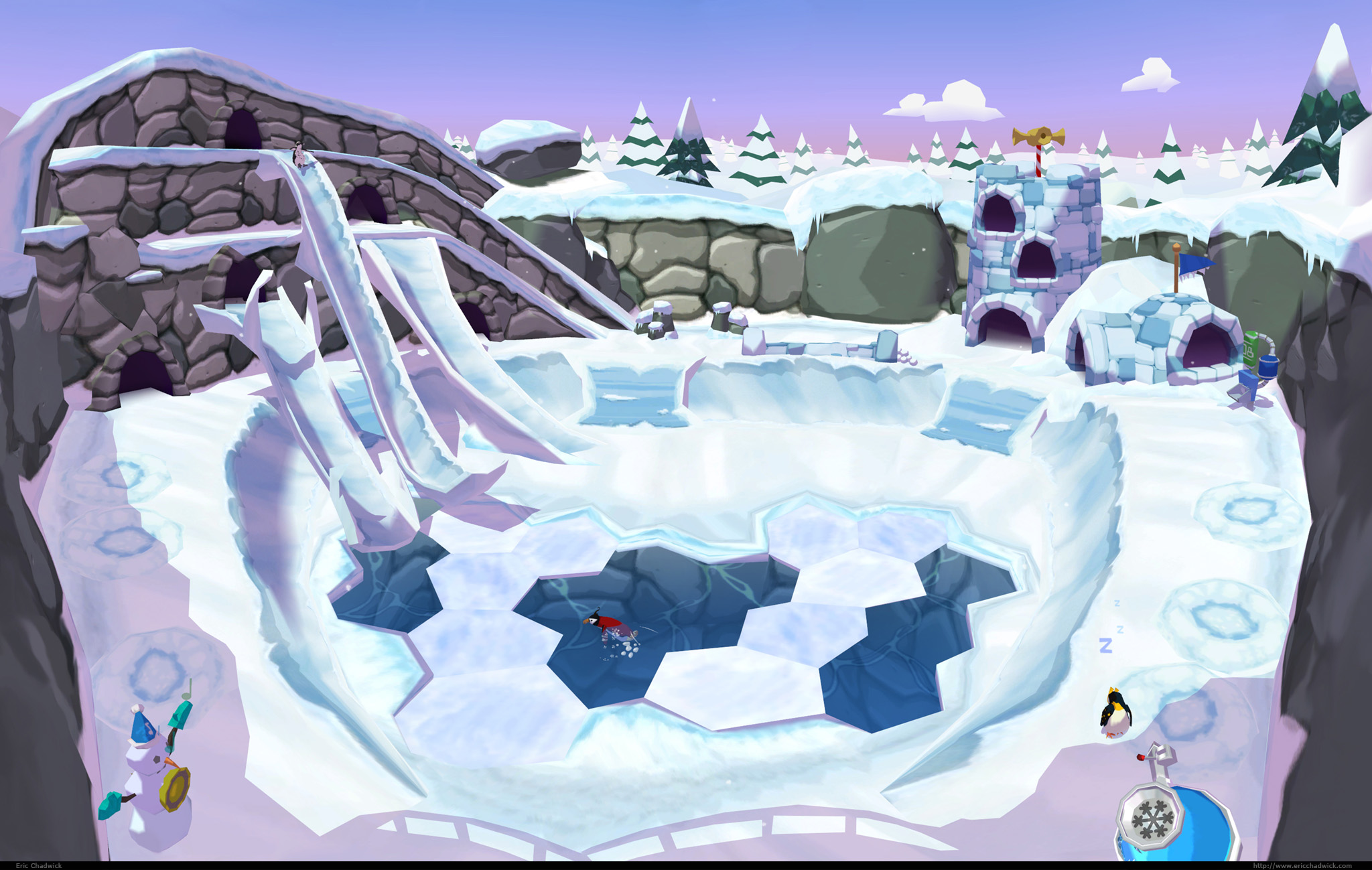
Designers to create a cohesive play area that kept the gameplay moving in a circular path
around the player, while retaining a complex pre-existing setup in the pool area.
To get it all done on time, I directed an "all hands on deck" team of four artists over the course of a long weekend to create the new penguin level and integrate it into the game. Our success ended up generating a lot of excitement within the studio, as well as with the publisher, and helped the studio get moving in the right direction for the rest of development.
Antelope Environment
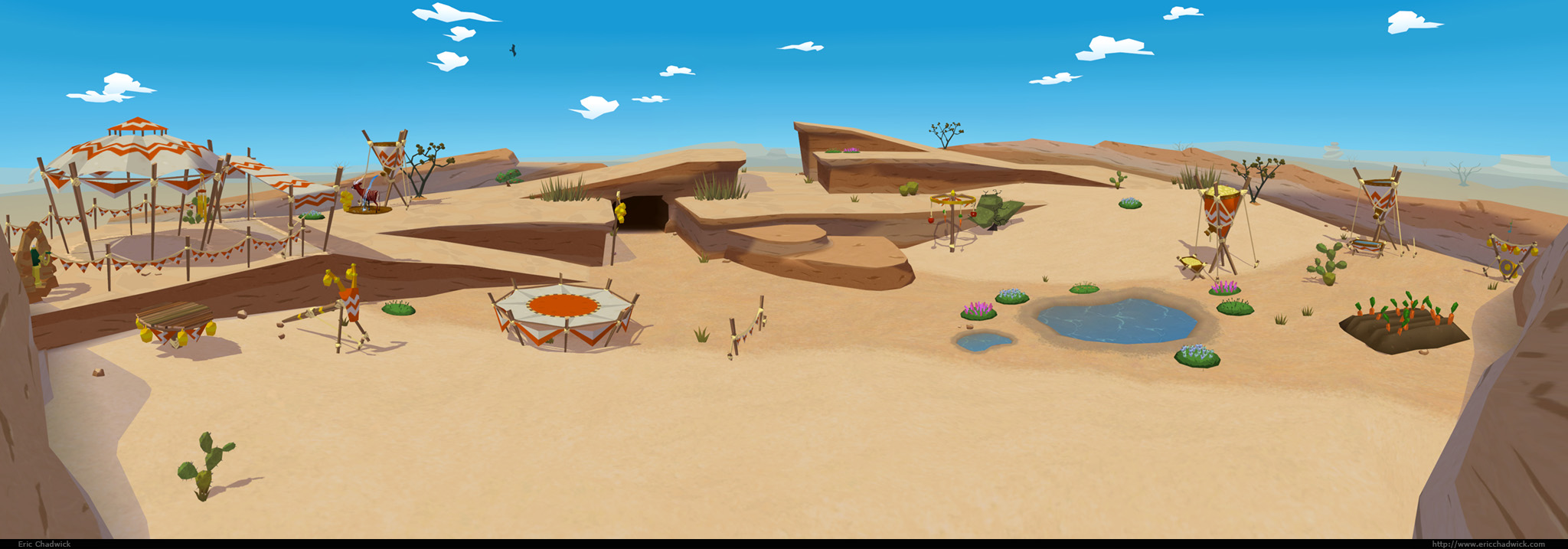
I also created the antelope environment, coordinating with another artist who created the props.
We devised a windswept desert in the Southwest with crystal-clear blue skies
and an oasis pool. I modeled, textured, lit, and setup all the collisions for the main scene, and
worked with the AI team to smooth out how the animals jump from rock to rock.
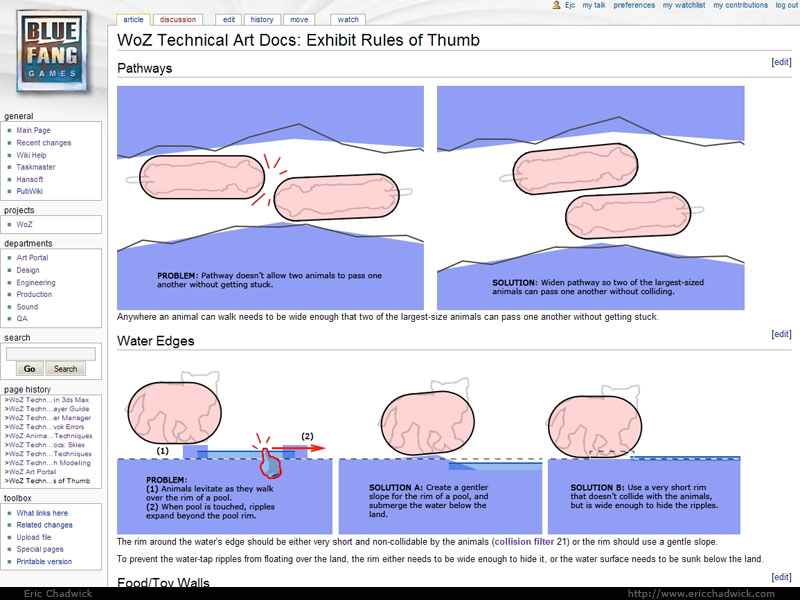
Exhibit Rules of Thumb
Animal navigation was one of the stumbling blocks in development. I worked with the
Creative Director to define key rules for the environment artists, and developed diagrams to help
them get the most out of their layouts, which helped the game avoid the "endless bumping into walls"
syndrome.
Camera Setups
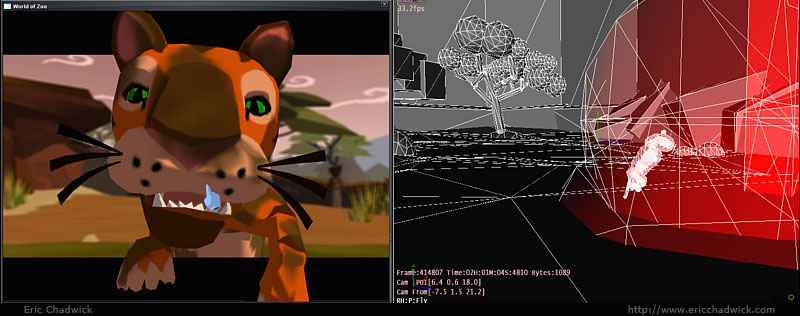
One of the key issues we had to deal with was how to keep the animals and the throwable
food and toys from disappearing behind the player's camera, where the player couldn't get to them.
I figured out the undocumented camera system and developed a Havok collision setup to fix it. I then
implemented the setup in each environment in the game, and explained how it worked in the company wiki
for future reference.
Performance & Memory
There was a constant battle for memory and a good framerate on the Wii, so I worked with artists and
engineers on optimizing assets, assessing memory and performance stats, determining memory budgets, and
assessing packfile waste.
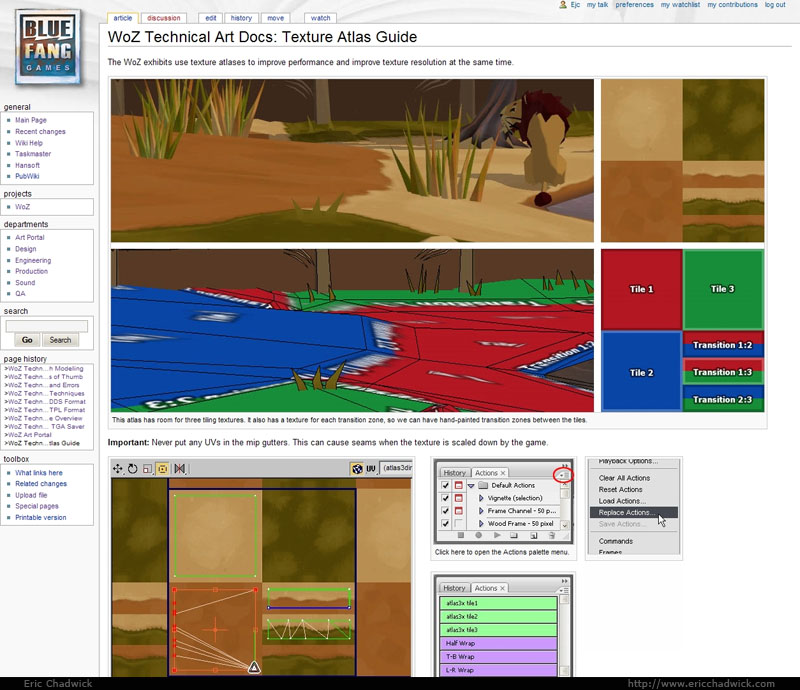
The Lead Artist and I developed a texturing scheme for the environments that would keep the hand-drawn look but reduce the number of separate draw calls. I then created a Photoshop Action script for the artists that automated the process... it tiled each texture, added mip borders, and put them together into the atlas layout.
Team Management
Four months into the job I was promoted from Senior Artist to Lead Technical Artist, primarily to help
solve communication problems between the two Tech Artists and the rest of the Art team.
I inherited a situation where neither team wanted to talk to the other unless they had to. So I set myself as the temporary go-to guy for all Tech Art questions, and worked with each team member to repair old misunderstandings and get people talking again. I started a daily "TechArtStatus" email list, to share Tech Art information with the other teams. I tested each tool update before it was released to the artists, to make sure it worked within artist expectations and to avoid lost production time.
I also made sure to spend time working with the team Engineers, not only to develop new workflows and tools, but also to ensure the communication lines stayed open between art and code.